For early-stage parents, learning that their baby exhibits auditory issues consistently seems heartbreaking and scary. Fortunately, the reassuring perspective dictates that through timely checks and early help, babies with hearing issues can realize profound developmental success. Beyond question, such babies can gain verbal communication, expressive ability, and strong bonds within their surroundings, ensuring a bright, enriched future!
Relying on modern hearing aids and advanced cochlear implants yields two reliable clinical methods for helping babies with hearing impairment. Inside this overview, we outline their functional attributes to help you choose the optimum pathway for your infant.
Analyzing Infant Auditory Deficits
Congenital hearing impairment in infants can emerge as a result of specific root causes, such as:
- Potential genetic predispositions (even in the absence of documented familial lineage)
- Congenital pathogen exposures such as cytomegalovirus (CMV) and rubella viruses
- Complications during birth, including lack of oxygen or preterm delivery
- Certain intensive care medications applied in dedicated neonatal care facilities
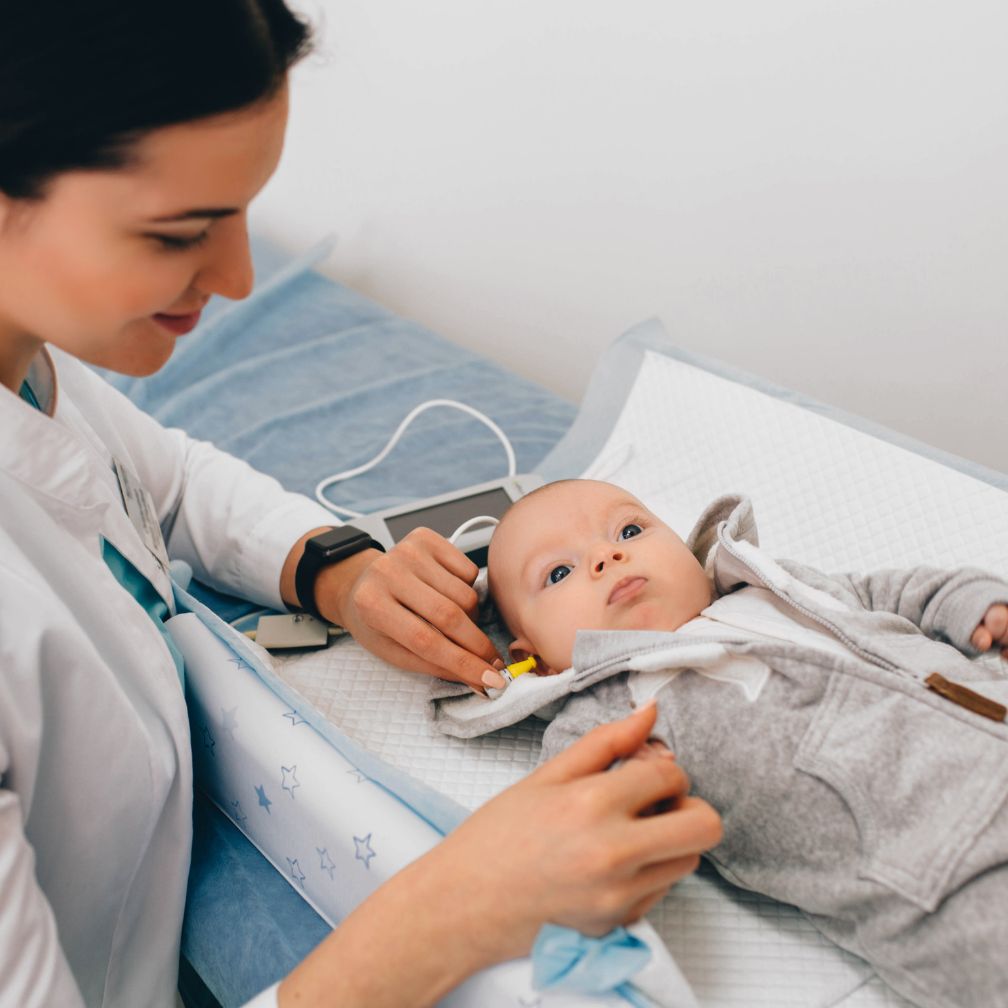
What action holds the highest value? Rapid diagnostic confirmation. For these reasons, infants across United States medical centers receive official hearing checks before going home. Respected pediatric hearing experts routinely utilize the industry-standard “1-3-6” target timetable:
- Baseline screening executed inside 30 days post-birth
- Full clinical diagnosis confirmed before 3 months of age
- Targeted treatment (involving medical devices or specialized speech therapy) launched before 180 days
Meeting these procedural steps offers infants their best chance for flourishing speech, language acquisition, and cognitive health. Whenever you seek direction concerning these newborn screens, your family pediatrician will gladly help!
Pediatric Hearing Aids for Young Babies
For young children showing mild to severe auditory impairment, digital hearing aids routinely constitute the recommended first step. These small, specialized devices boost ambient audio signals, enabling infants to perceive spoken words and environmental noise with greater clarity.
Specialized hearing devices for babies function as:
- Exceptionally safe for direct use on newborns aged just a few weeks
- Designed with pliable, comfortable custom molds that adapt as the baby matures
- Furnished with tamper-resistant battery latches and custom pediatric safety options
- Custom-calibrated by a pediatric hearing practitioner to match your baby’s specific auditory profile
During physical development, hearing aids necessitate regular clinical recalibrations to maintain physical comfort and functional efficacy.
Cochlear Implants for Infants
Should an infant suffer from severe to profound sensorineural impairment while getting minimal improvement from hearing aids, clinicians often recommend a cochlear implant. Differing fundamentally from conventional amplification tools, cochlear implants:
- Are surgically implanted during a specialized medical procedure
- Completely circumvent non-functional elements inside the cochlear pathway
- Process incoming audio into direct electrical pulses that stimulate the auditory nerve directly
Advanced cochlear implants function as:
- FDA-approved for young children aged 9 to 12 months and older
- Highly successful when paired with early auditory-verbal therapy and active household backing
- Recommended only after a comprehensive diagnostic assessment by a pediatric audiologist and ear, nose, and throat doctor
That pre-surgical path incorporates diagnostic imaging, specialized auditory testing, and in-depth discussions surrounding achievable long-term goals.
Hearing Aids vs. Cochlear Implants: What’s the Difference?
- Mild to severe hearing loss targets Hearing Aids; Severe to profound auditory destruction warrants Cochlear Implants
- Non-Invasive wearable design: Hearing Aids; Surgical internal implantation: Cochlear Implants
- Traditional acoustic amplification: Hearing Aids; Converts Sound Electrical Signals: Cochlear Implants
- Intervention starts in early infancy: Hearing Aids; Starts at 9-12 Months: Cochlear Implants
Hearing Aids vs. Cochlear Implants: Final Thoughts
If your baby has been diagnosed with hearing loss, you have options alongside extensive professional backing. By partnering with skilled pediatric auditory specialists, many young children achieve language capabilities completely equal to their hearing peers.
Whether your baby benefits most from custom hearing aids or a cochlear implant system, prompt intervention unlocks lifelong developmental success.
Are you looking for clarity regarding your infant’s hearing development? Call our clinic today to receive a complete diagnostic assessment and personalized rehabilitation plan.